The human obsession with aquatic habitation has evolved far beyond the pages of Jules Verne. Today, hyper-luxury underwater suites exist at the intersection of marine biology and extreme structural engineering, offering unprecedented access to the silent world of the deep.
The Architecture of Pressure
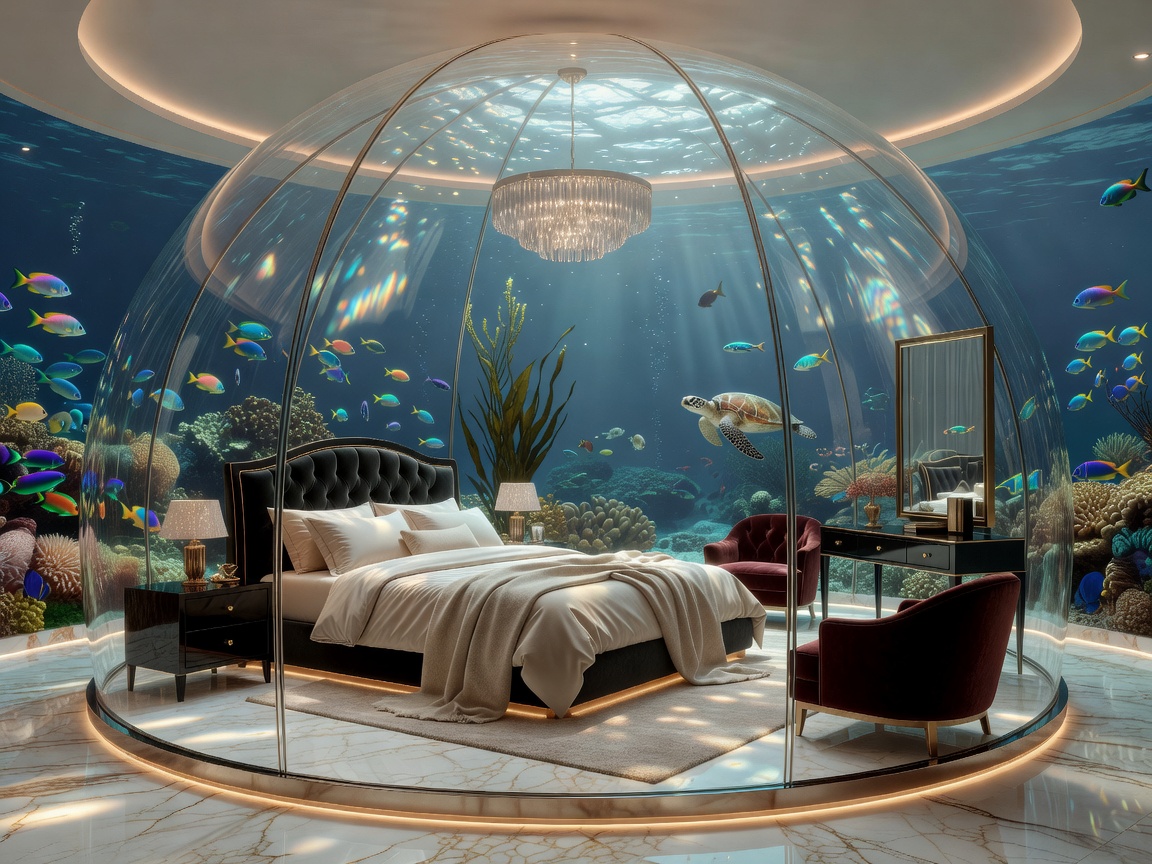
Constructing a dry habitat 16 to 30 feet below the surface presents immense technical challenges. Architects primarily utilize curved acrylic—often up to 6 inches thick—rather than traditional glass. Acrylic offers superior thermal insulation and optical clarity while resisting the crushing hydrostatic pressure of the surrounding ocean.
In locations like the Maldives' Abyssal Suite, the structure was built entirely on land, carefully floated to the destination atop a barge, and meticulously sunk onto reinforced steel pilings driven deep into the seabed. The dome itself is constantly cleaned by specialized scuba teams to ensure uninterrupted views of the coral reef ecosystem.
Sensory Deprivation & Saturation
Guests often describe the experience as a form of luxurious sensory deprivation. The acoustic properties of the ocean nullify surface noise, replacing it with the low, rhythmic hum of water currents. Lighting is strictly controlled; internal illumination must be kept minimal at night to avoid reflecting off the acrylic interior, while external marine-safe lighting attracts bioluminescent life directly to the bedroom window.
Pioneering Aquatic Structures
- The Abyssal Suite (Maldives): A purely acrylic dome anchored 16 feet down, prioritizing 180-degree coral reef viewing.
- Mariana Glass Pod (Dubai): A three-story conceptual vessel where the master bedroom is permanently submerged.
- Poseidon's Keep (Fiji): Early prototypes of modular sub-sea resort rooms designed to act as artificial reefs over time.